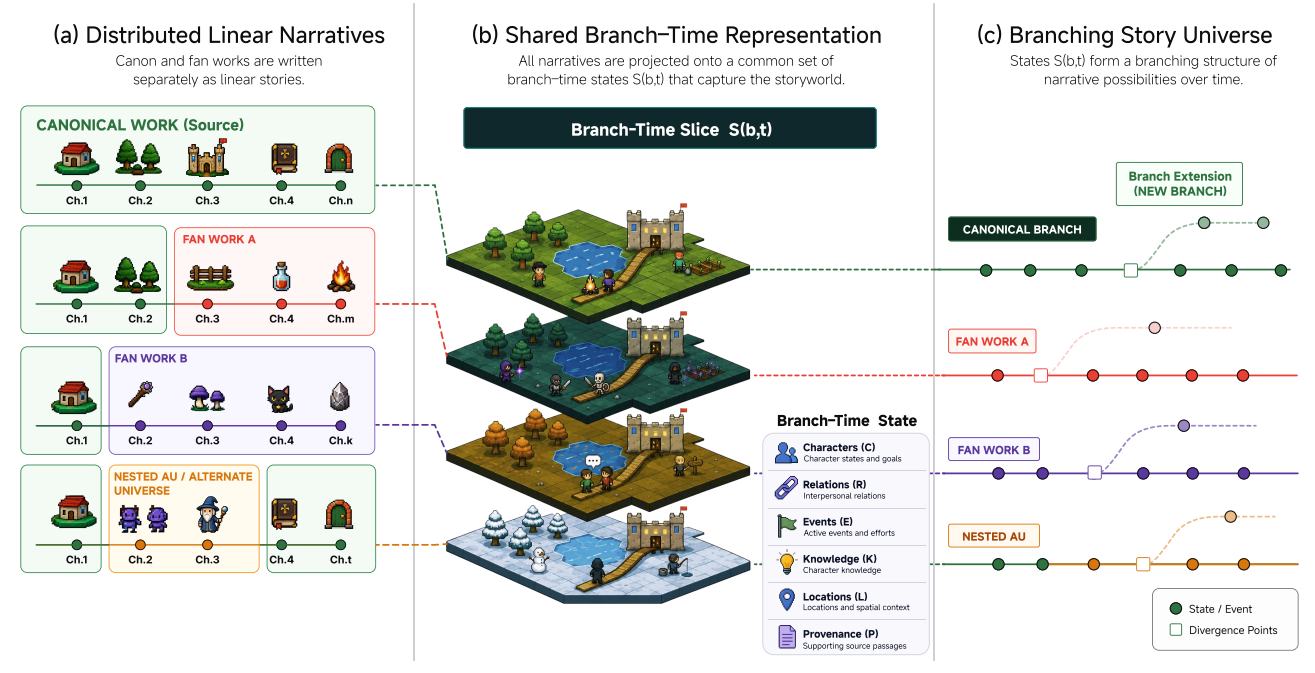
Fan works form branching story universes, but existing platforms present them as isolated linear narratives. We introduce FANVERSE, an AI-powered system enabling users to explore interconnected story branches and create new ones. Evaluations demonstrate its effectiveness in story construction, cross-branch reasoning, and narrative extension.
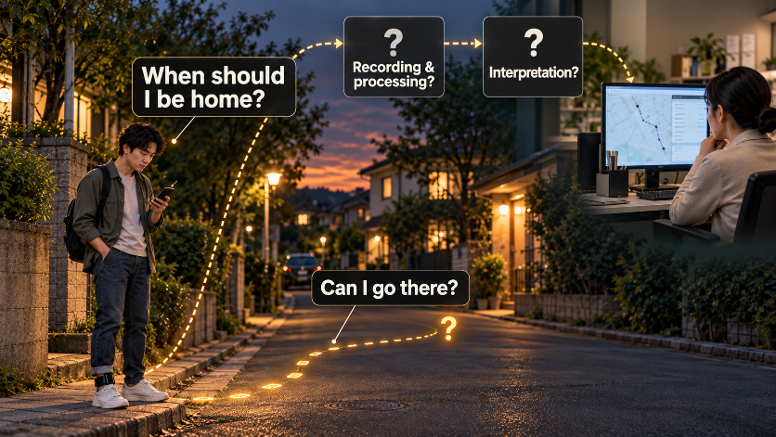
This paper presents a study on behavioral probing and adaptation in mandatory wearable sensing. It addresses the challenge of understanding user behavior and adapting to their needs in real-world scenarios.
Research areas: User modeling & understanding, Explainable AI.
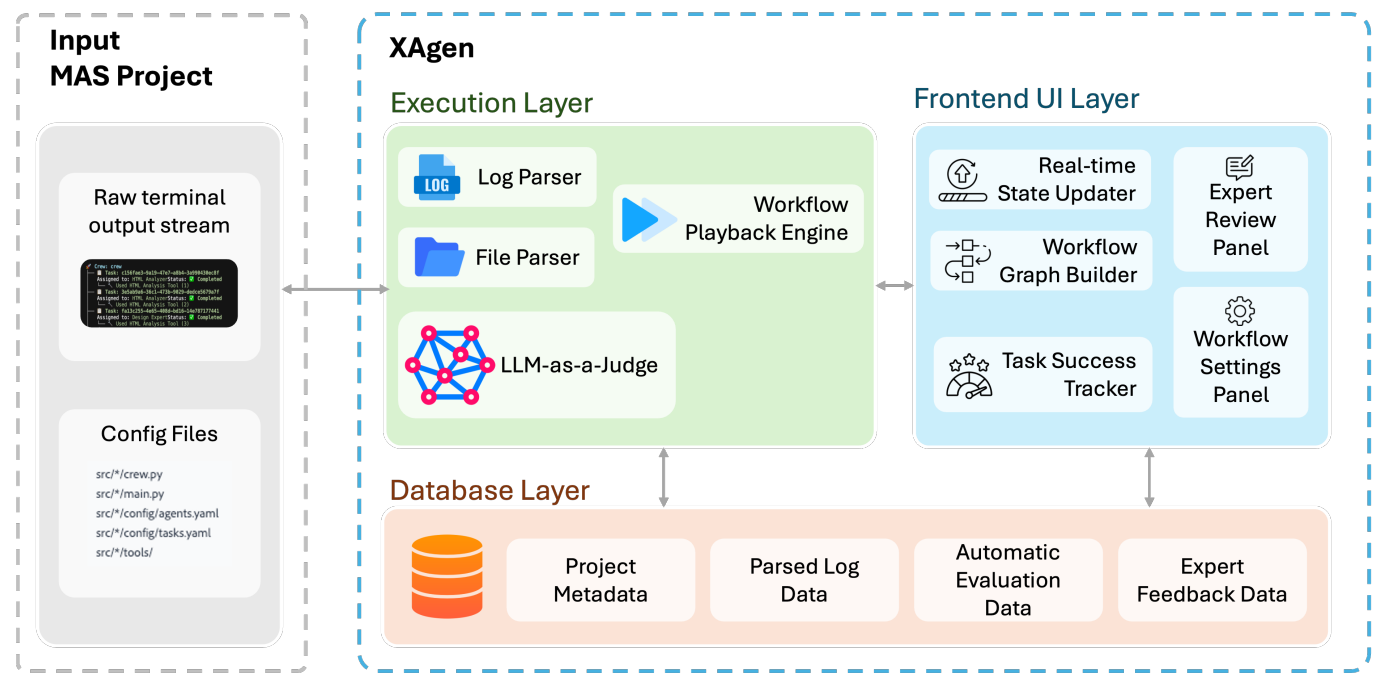
This paper presents XAgen, a framework for designing explainability support in multi-agent workflows. It addresses the challenge of failure detection and correction by providing transparent and interpretable insights into agent behaviors and decisions.
Research areas: Explainable AI, Human–AI collaboration.
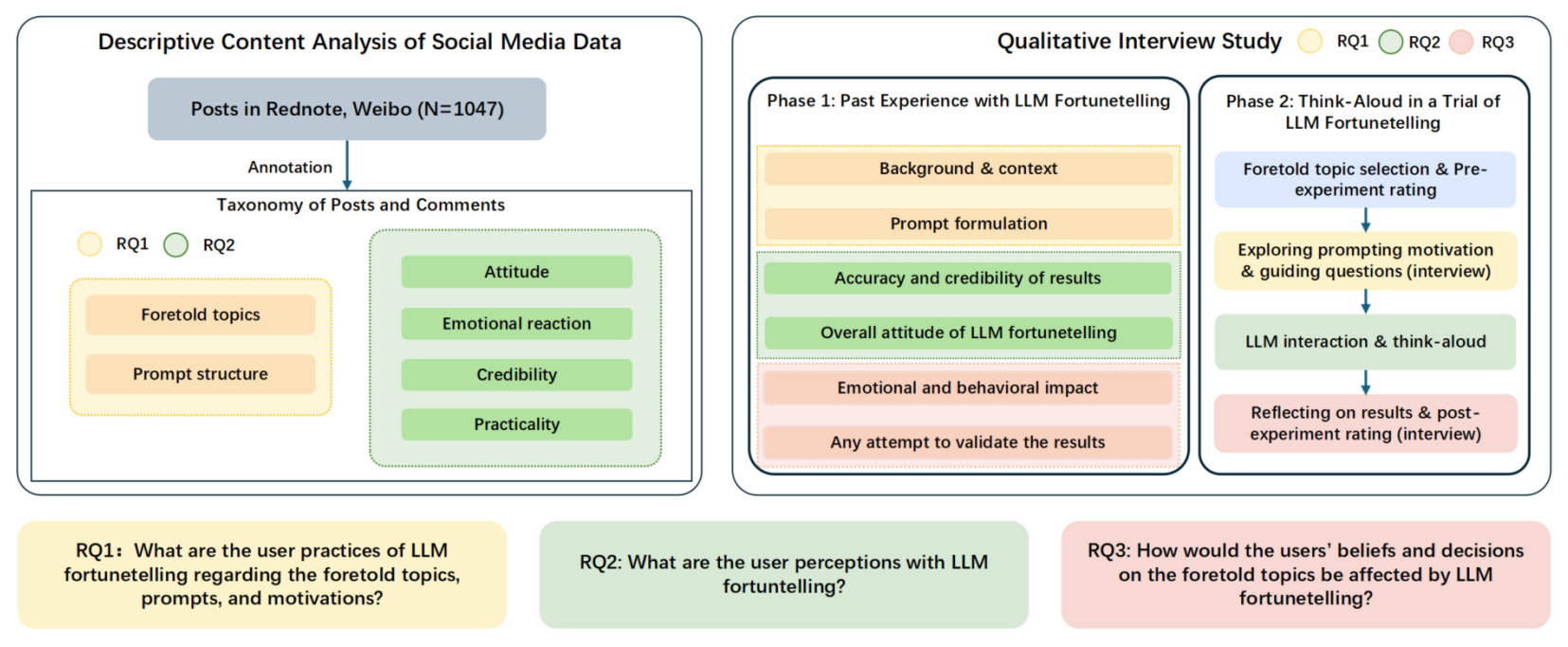
This paper examines why people use LLMs for fortunetelling and how such interactions affect them. Through an analysis of 1,045 Chinese social media posts and interviews with 20 users, the study finds that LLM fortunetelling is used less for accurate prediction than for coping with uncertainty and seeking emotional support. Although it rarely changes users’ major beliefs or decisions, it can subtly shift their mindset and lead to small behavioral adjustments.
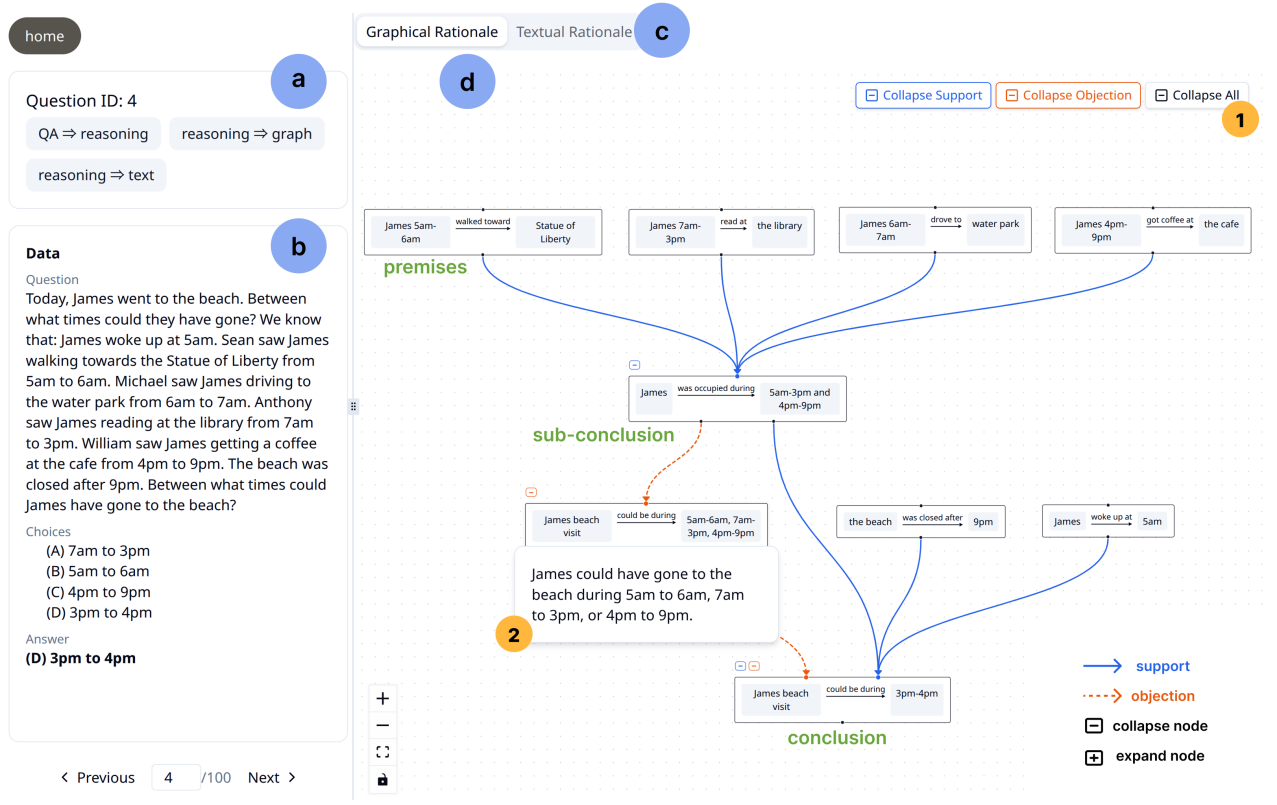
This paper asks a simple but important question: when do graphical explanations actually help people reason with LLMs? Through a 204-participant study, it finds that turning dense LLM rationales into interactive argument maps can improve trust calibration in some tasks, but hurt it in others. Strikingly, the explanation format users prefer is not always the one that helps them make better decisions, showing that effective AI explanations must be matched to the task.
Research areas: Explainable AI, Human–AI trust calibration.
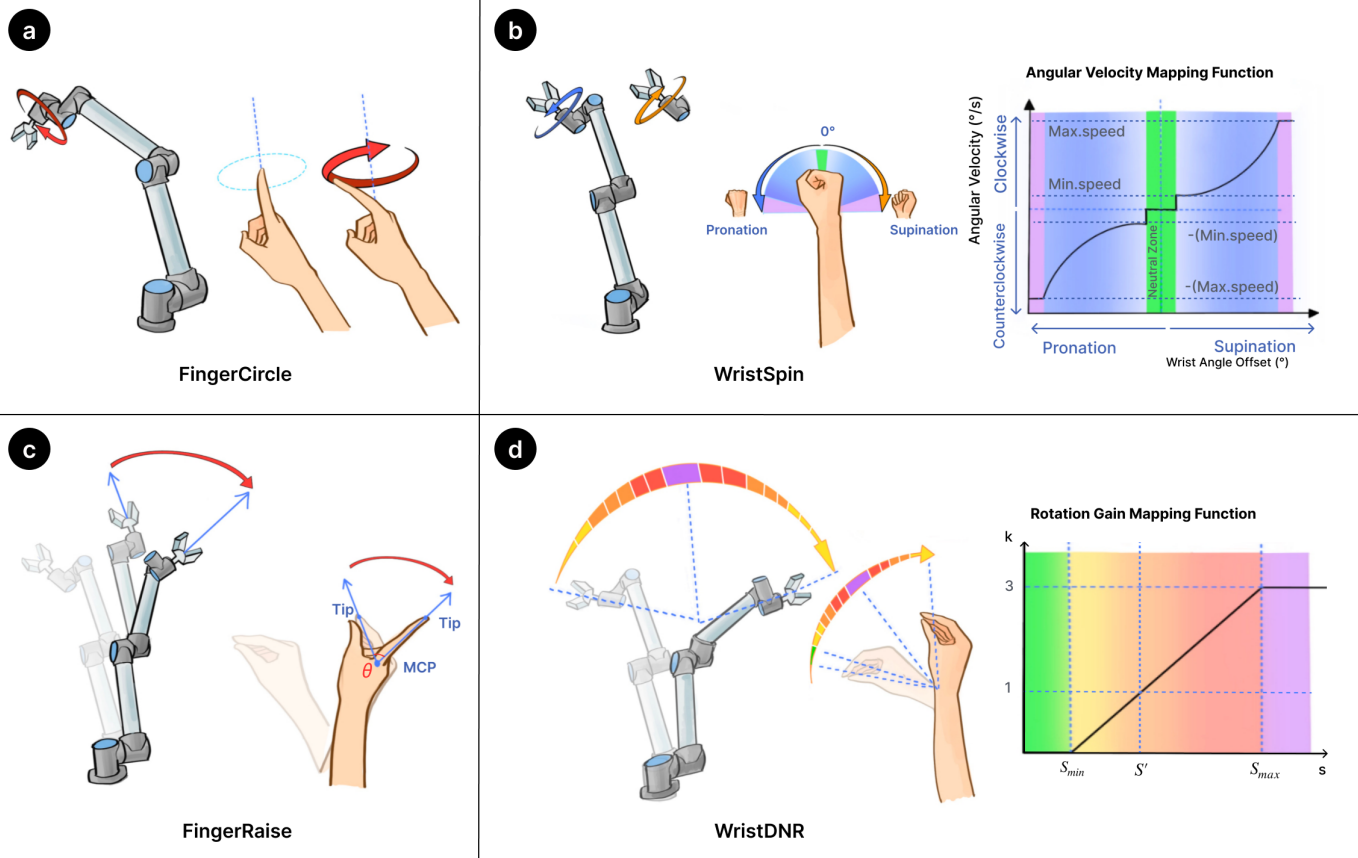
This paper addresses a key limitation of free-hand robot teleoperation: human wrist motion cannot fully exploit robotic arm dexterity. Based on 60 demonstration videos, the authors identify three robotic motion capabilities that exceed human biomechanics and propose four VR-inspired interaction techniques to extend users’ control. Evaluations in VR and on a UR5 robot show that these techniques improve rotation, alignment, and orientation control while reducing operator workload.
When we describe our needs to LLMs, we often know what we want internally, but struggle to articulate our needs and intentions clearly and precisely through language. To address this challenge, we propose Adaptive Prompt Elicitation, which adaptively selects visual queries to help AI quickly refine human intent. This approach significantly improves human intention alignment while introducing no additional workload.
Research areas: User modeling & understanding, Human–AI collaboration.
Expressing prior beliefs is a critical step in Bayesian analysis—but translating intuitive knowledge into statistical distributions is notoriously difficult. We introduce PriorWeaver, an interactive system that lets analysts visually construct datasets to express their assumptions. By turning intuitive beliefs into data and iteratively refining them through prior predictive checks, PriorWeaver helps analysts produce priors that better match their expectations.
Research areas: User modeling & understanding, AI4Science / Social Science.
Hate speech moderation often focuses on offenders and targets—but what about the silent majority watching the conversation? We build Civilbot, a counterspeech bot designed to intervene in online discussions, and study how it influences bystanders. Our results show that reason-based counterspeech delivered with a positive tone is most effective, revealing how well-designed bots can subtly mobilize bystanders and shape healthier online discourse.
Research areas: User modeling & understanding, AI4Science / Social Science.
Online discussions promise collective knowledge building—but many stall at shallow exchanges. We design an LLM-powered facilitation agent that strategically intervenes to help conversations dig deeper. Through a study with 60 participants across multiple discussions, we show that AI interventions can push discussions from surface-level sharing toward deeper reasoning and synthesis, revealing how AI can sustain more meaningful online discourse.
Research areas: Human–AI collaboration, AI4Science / Social Science.
Traditional Medicine (TM) has long served as a cornerstone of healthcare, yet its integration with AI remains limited. Through interviews with 16 TM clinicians, we explore how AI-powered clinical systems are perceived and used in practice. Our findings reveal low adoption due to TM’s unique diagnostic logic and data challenges. We discuss these barriers and propose ways to better align AI innovations with the realities of traditional medicine.
Research areas: User modeling & understanding, Human–AI collaboration.
What happens when you disagree with your AI collaborator during decision-making? We explore how to resolve such conflicts by leveraging the power of Retrieval-Augmented Generation. Acting as a communication bridge, a large language model enables deliberation between human decision-makers and domain-specific smaller models, significantly improving decision quality in the face of disagreement.
Research areas: Human–AI collaboration, Human–AI trust calibration, Explainable AI.
Can AI-generated digital humans serve as a form of digital legacy—allowing us to “live on” in this world? Our comprehensive qualitative analysis investigates the full lifecycle of the “AI afterlife,” shedding light on how society envisions—and grapples with—this future.
How do humans and service robots naturally express intentions through interactive actions in social settings? Our work offers valuable insights into natural human-robot interactions in the era of embodied intelligence, revealing how subtle, intuitive behaviors can serve as effective communicative cues.
Research areas: User modeling & understanding, Human–AI collaboration.
Can LLMs be used to help learners learn algorithmic programming? We propose a Learner-LLM Co-Decomposition approach to make LLMs scaffold such learning process.
We present a humanized conversational agent for hospital admissions that balances efficiency and empathy. Co-designed with clinicians, our system uses dynamic graph-based conversation flows and context-aware scaffolding to adaptively guide interviews. It outperforms existing solutions in both data accuracy and user experience, offering a promising path for AI-assisted healthcare interactions.
Research areas: User modeling & understanding, Human–AI collaboration.
We promote human-AI hybrid intelligence from the perspective of mutual understanding between humans and AI. This paper systematically introduces our previous work on enabling human-AI hybrid intelligence by enhancing human understanding of AI, AI’s understanding of humans, and humans’ self-understanding.
Research areas: User modeling & understanding, Human–AI trust calibration, Explainable AI, Human–AI collaboration.
AI is often used as a recommender in decision-making, but this can reduce human analytical thinking and cause over-reliance on AI. This paper examines three AI roles—Recommender, Analyzer, and Devil’s Advocate—at two performance levels, revealing their unique strengths and weaknesses and informing the design of adaptive AI assistants.
Research areas: Human–AI trust calibration, Human–AI collaboration.
This paper investigates human self-confidence calibration in AI-assisted decision-making, conducting three user studies to analyze its effect on human-AI collaboration. Findings indicate that proper self-confidence calibration improves rational behavior and appropriate reliance in human-AI teams.
Research areas: User modeling & understanding, Human–AI trust calibration, Human–AI collaboration.
This study investigates using AI usage data for learning assessment in project-based education. Through workshops with college students, we explored how AI data can reflect students’ skills and contributions, informing the development of future educational tools.
This paper explores the ICT-mediated social connections of late-life migrants, focusing on the dynamic changes in their social networks and the roles of ICT in these shifts. Our findings offer in-depth insights and design implications for future ICT-based support systems for this demographic.
How do data scientists view suggestions from peers and AI when performing feature engineering? We designed a human-AI collaborative feature engineering framework and conducted an empirical study to uncover key opportunities and limitations in current AI support.
Research areas: Human–AI collaboration, AI4Science / Social Science.
We conduct a survey study on XAI from empirical study perspectives, highlighting the importance of designing human-centered XAI methods from the explainee’s perspective.
Project-based learning in the age of generative AI makes assessment challenging. SelfGauge supports student self-assessment by analyzing GenAI usage and project artifacts, helping students define criteria, seek feedback, and reflect on performance.
Research areas: User modeling & understanding, Human–AI collaboration.
We proposed to promote humans’ appropriate trust based on the correctness likelihood of both sides at a task-instance level. Results from a between-subjects experiment showed that our strategies promoted more appropriate human trust in AI compared with only using AI confidence.
Research areas: User modeling & understanding, Human–AI trust calibration, Human–AI collaboration.
Targeting a multi-step human-AI collaboration task for chemists, we proposed RetroLens through a participatory design process. AI contributes by both joint action and algorithm-in-the-loop collaboration.
Research areas: Human–AI collaboration, AI4Science / Social Science.
We studied what happens when AI participates equally in human group decision-making. Although the voice of AI is considered valuable, it still plays a secondary role because it cannot fully follow discussion dynamics or make progressive contributions.
Research areas: User modeling & understanding, Human–AI collaboration.
For human-robot teaching scenarios, we propose an adaptive modeling and expression method to facilitate transparent communication of robots’ learning statuses during human demonstration.
Research areas: Explainable AI, Human–AI collaboration.
Focusing on synchronous online classes, Glancee addresses instructors’ difficulty in observing students’ learning status when students are unwilling to show video. It provides adaptable support tailored to instructors’ needs.
How to effectively personalize a general model? We proposed a user preference modeling method based on interactive machine learning and designed a confidence-based integration framework to personalize a deep neural network for individual photo composition preferences.
Research areas: User modeling & understanding, Human–AI collaboration.
Video editing is challenging due to the time-consuming task of screening useful clips from raw footage. Based on surveys and interviews, we developed Pre-screen, a tool that offers global and detailed video analysis and intelligent material screening.
This paper introduces Reminder, a system that detects divided attention in MOOCs using cameras on PC and mobile devices. It predicts attention scores, adapts to users, and offers visualizations to help learners review missed content.
This position paper introduces three ongoing research projects focused on designing, developing, and evaluating systems for human-AI interaction in healthcare across a multi-tier healthcare network.
Research areas: User modeling & understanding, Human–AI collaboration.
We explored the feasibility and accuracy of detecting motor impairment in Parkinson’s disease via implicitly sensing and analyzing users’ everyday smartphone interactions, achieving strong discrimination performance in a 42-subject study.
We present mirrorU, a mobile system that supports users in reflecting on and writing about daily emotional experiences through in-situ assessment and interactive feedback.